In the fast-paced world of high-volume recruitment, recruiters often find themselves caught in a whirlwind of high staff turnover.
How to find out what’s causing high staff turnover
The churn can be so swift and relentless that continually needing to fill a leaking bucket of candidates for the same roles becomes a monotonous and bewildering task.
However, amid this frustration, the actual root cause of high attrition often remains elusive.
In this post, we’re going to talk about industry employee turnover benchmarks in 2023, how to pinpoint what’s causing high turnover, and how to implement changes to your recruitment process that will lower the number of employees quitting.
What is considered a high turnover?
Turnover can result from voluntary factors, such as employees leaving due to dissatisfaction, or involuntary factors, such as redundancies.
On average, companies can expect to experience a 13% turnover in their workforce due to voluntary factors.
Turnover is highest in high-volume recruitment industries, such as food service, retail, and warehouse operatives.
High-volume recruiters should always have their pulse on the turnover rate, as even small changes can hugely cut recruitment costs, increase productivity, and boost employee morale.
How do you reduce high turnover?
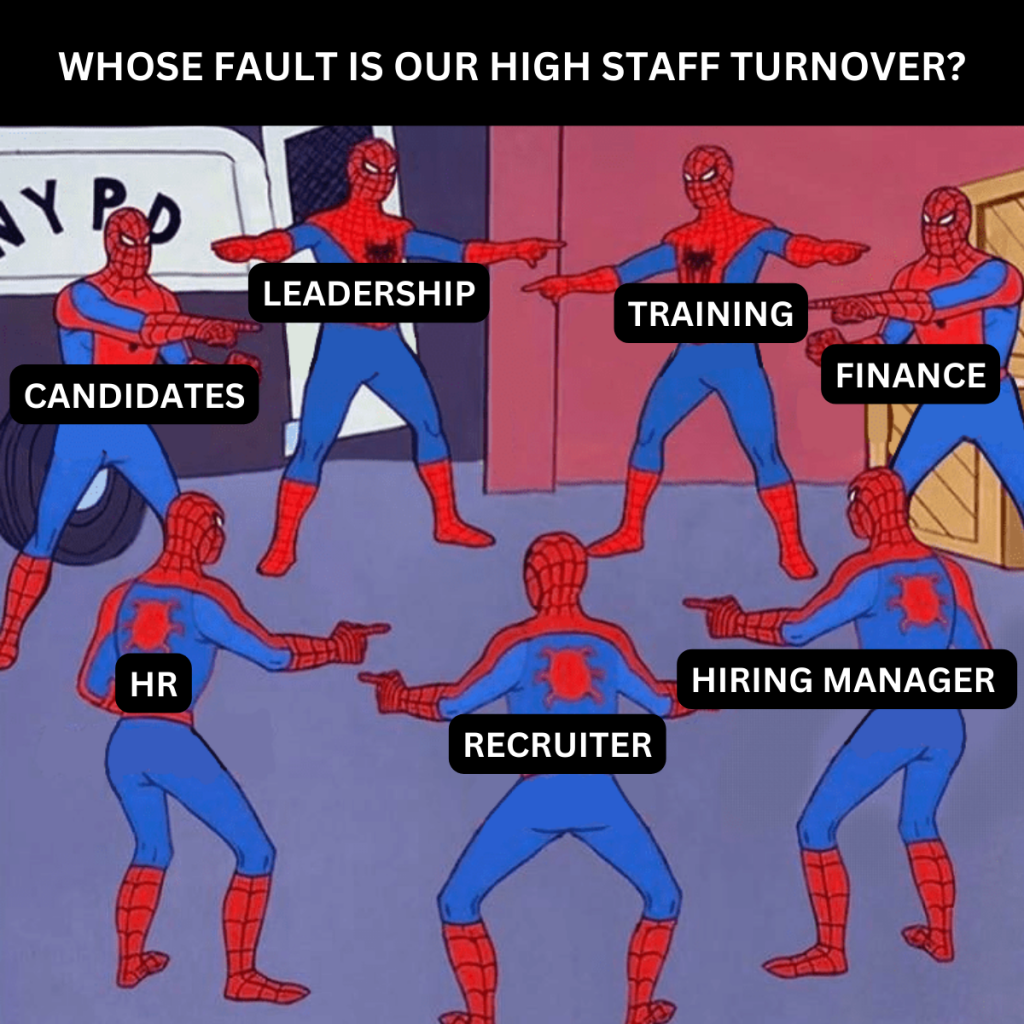
All too often, when it comes to explaining why there is a high turnover of staff, fingers start getting pointed at different departments.
“The salary wasn’t competitive”
“They weren’t properly onboarded”
“They were a bad fit”
Every time an employee leaves, it costs on average 1.5 – 2 x the employee’s salary to fill their role.
With over 50% of employees who left a role within the first 90-days citing company culture as the primary reason, addressing and improving that mismatch between candidate expectations and realities is essential in reducing turnover.
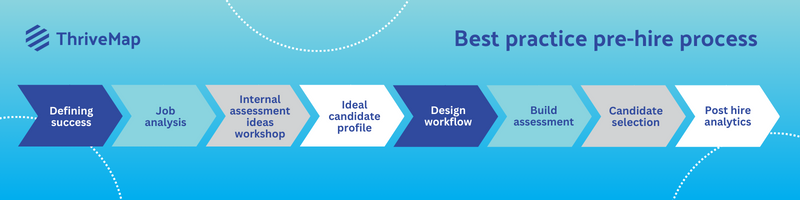
This 6-step process will reduce your turnover
- Assemble your success criteria for the role
- Conduct a job skills audit of people doing the job
- Bring your key project stakeholders together with a workshop to discuss the skills required
- Develop your Ideal Candidate Profile
- Build a Realistic Job Assessment
- Select candidates based on their performance of the Realistic Job Assessment
ThriveMap’s results backs up that 75% of the reasons for employee turnover can be prevented.
Addressing high turnover requires a holistic, whole-team approach to collectively examine the end-to-end process.
If you’d like a best practice approach to optimising your pre-hire process to reduce turnover, get a demo from ThriveMap here.
More tools and resources to reduce your turnover:
- How Bulb improved productivity and performance with ThriveMap’s pre-hire assessments
- Buyer’s guide to pre-hire assessments
- Calculate the cost of failed hires
Ready to see how high-volume recruiters are reducing turnover by over 50%?
Access our whitepaper report here:
Keep reading.
Employee Turnover
Mitie’s new approach to prison recruitment: Solving prison service attrition challenges with Realistic Job Assessments
The UK prison service is grappling with persistent recruitment and retention issues that undermine workforce stability and operational efficiency. Attrition rates reached 13.4% as of June 2023, highlighting the urgent need for innovative hiring practices. The expectation gap challenge The Efficiency Spotlight Report from the Criminal Justice Joint Inspection highlights critical challenges in the prison […]
Employee Turnover
How to retain frontline workers
Struggling with high staff turnover? Are potential hires vanishing from your recruitment process? Spending countless hours screening applications for the same roles? If you answered yes to any of the above, it’s a telltale sign that points to a deeper issue: a leaky recruitment process. Frontline workers serve as the backbone of most businesses, ensuring […]
Employee Turnover
11 ways to reduce the attrition rate in your call centre
The employee attrition rate in a call centre can have a significant impact on the success and profitability of an organisation. A high staff turnover can be costly, time consuming and disruptive to business operations. It is therefore essential for organisations to take proactive steps to reduce their attrition rate. This article will provide practical […]