Call centers are the backbone of customer service for many businesses, handling a myriad of enquiries and concerns daily. However, the traditional recruitment methods used by most call centers often fall short, leading to challenges such as high attrition rates and mismatched skill sets among employees.
Best recruitment methods for call centres
Pitfall of current call centre recruitment methods
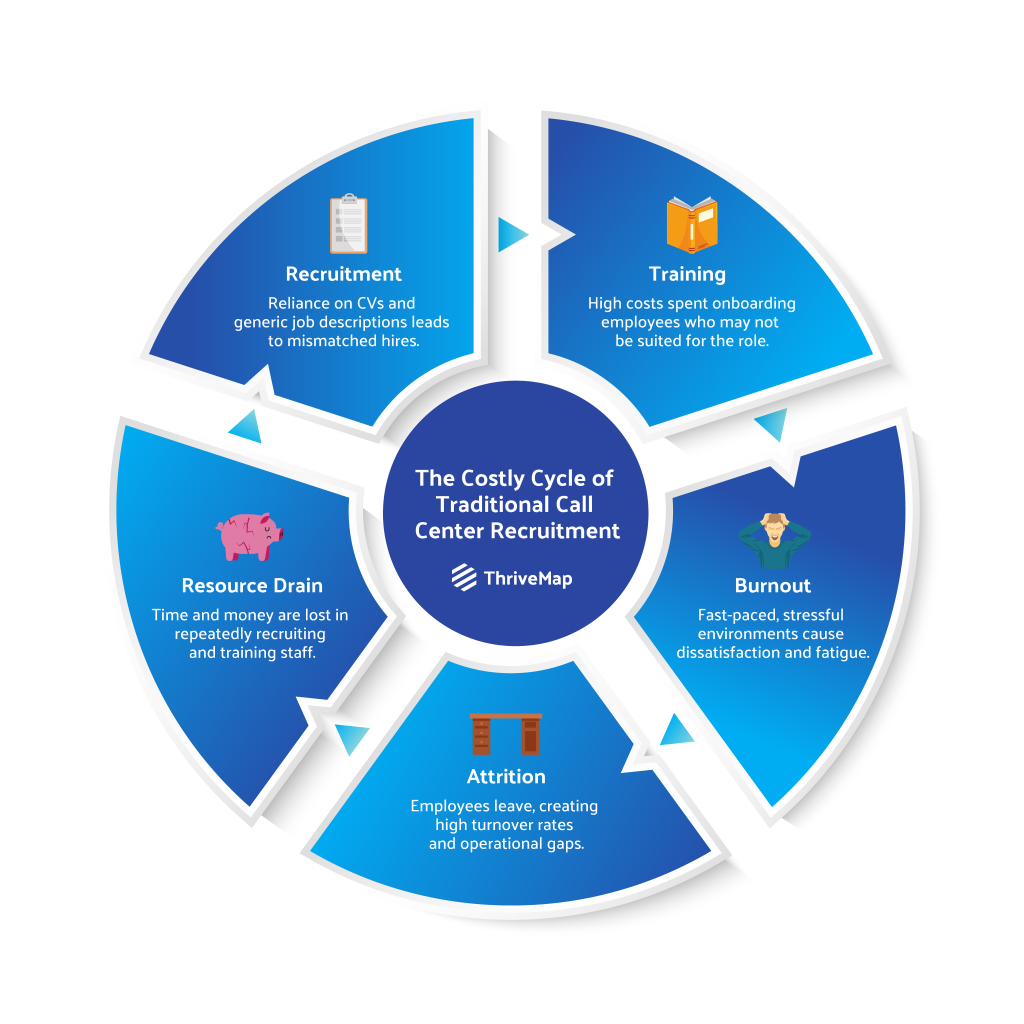
At the heart of the issue lies the reliance on generic job descriptions and CVs during the recruitment process. These methods often overlook the specific skills and qualities needed to excel in a call center environment. As a result, call centers frequently end up hiring individuals who may not possess the essential attributes required for the job.
One of the primary challenges facing call center recruitment is the persistently high attrition rates. The fast-paced nature of the job, coupled with demanding customer interactions, can lead to burnout and dissatisfaction among employees. Consequently, call centers find themselves in a constant cycle of recruiting and training new staff, draining valuable resources and impacting overall productivity.
The best call centre recruitment methods
To address these challenges effectively, call centres must adopt a more strategic approach to recruitment. Instead of relying solely on CVs and generic job descriptions, companies should focus on identifying and hiring candidates with the right skills and temperament for the job.
Realistic Job Assessments for call centre recruitment
One innovative solution is the use of Realistic Job Assessments during the recruitment process. These assessments provide candidates with a glimpse into the day-to-day responsibilities and challenges they will face in the role, allowing them to make informed decisions about their suitability for the position.
By offering candidates a realistic job assessment, call centers not only enhance the candidate experience but also reduce the likelihood of mismatches between job expectations and reality. This, in turn, leads to lower attrition rates and higher employee satisfaction.
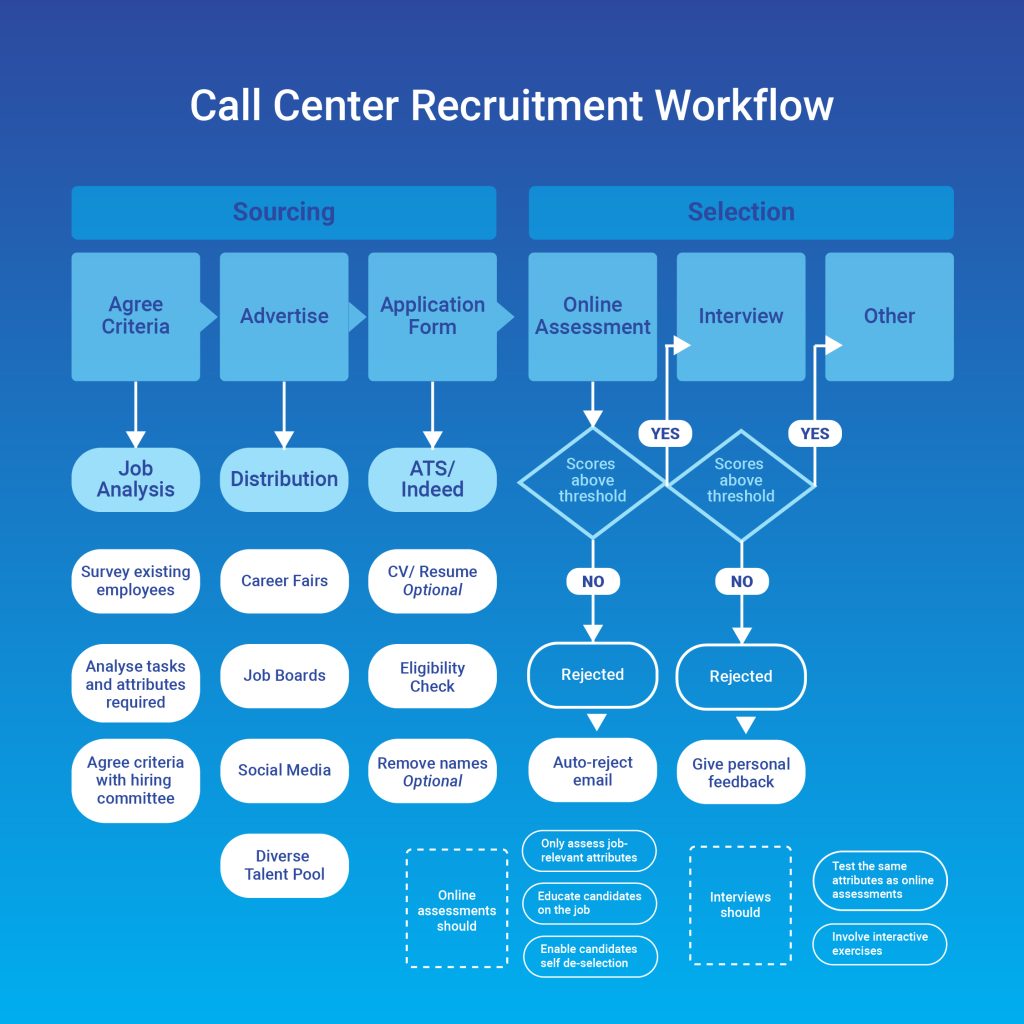
Furthermore, incorporating realistic job previews into the recruitment process can significantly reduce the cost and time associated with hiring. By providing candidates with a clear understanding of the job requirements upfront, call centers can streamline the selection process and focus their efforts on candidates who are genuinely interested and well-suited for the role.
Try Realistic Job Assessments for your recruitment process
Traditional recruitment methods used by most call centers are no longer sufficient in today’s dynamic business environment. To overcome the challenges of high attrition rates and mismatched skill sets, call centers must embrace innovative approaches such as Realistic Job Assessments.
By doing so, you can build a more resilient and effective workforce that is better equipped to meet the demands of the modern customer service landscape.

Keep reading.
Entry-Level Recruitment
Why Not All Realistic Job Assessments Are Equal
You set up a realistic job assessment for your latest open role. Candidates log in, answer a few scenario-based questions, and receive a score. You get a neat dashboard showing who performed best. The process feels efficient. But are you actually evaluating if the candidate fits the reality of the job, or are you just […]
Candidate Testing
8 Best Video Interview Software Tools to Streamline Hiring
Introduction Hiring top talent has never been more competitive, or more virtual. With distributed teams and busy schedules, video interview software has become an essential tool for recruiters, hiring managers, and HR professionals looking to evaluate candidates efficiently while delivering a great experience. In this post, we’ll cover the 8 best video interview tools, explain […]
High volume recruitment
Is your pre-hire assessment predictive of performance?
Most hiring assessments claim to be science-backed. But how many truly predict performance? From personality profiles to gamified puzzles, pre-hire assessments have exploded in popularity. But for all the bells and buzzwords, most have a fundamental problem: they aren’t actually predictive of on-the-job performance. And if they’re not measuring what success looks like in your […]