The demand for warehouse operatives has never been higher, presenting a unique set of challenges for hiring managers to differentiate the role and company in the hiring process.
How to Hire Warehouse Operatives: Best Practice Process
In this article, we delve into the best practices essential for the recruitment of warehouse operatives.
1. Agree your hiring criteria
Embark on your warehouse hiring journey by aligning managers and stakeholders to define precise hiring criteria. The stakes are high, and misalignment could lead to hiring delays or the selection of the wrong candidates.
2. Conduct a job analysis
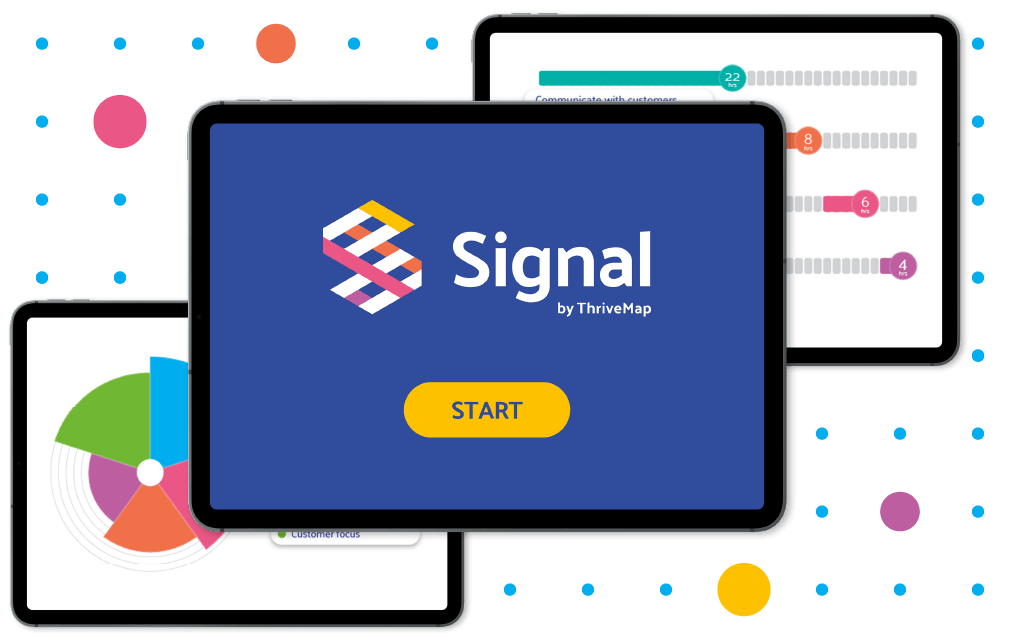
Warehouse roles evolve, demanding up-to-date hiring criteria. Conduct a comprehensive job analysis, leveraging tools like Signal, to ensure the criteria remain realistic and job-relevant, guarding against discriminatory hiring practices.
Please note that if your hiring process is deemed to be assessing attributes (behaviours, skills, knowledge) that aren’t job-relevant then you can be sued for discriminatory hiring practices. Use Signal to create a job analysis for free here.
3. Create honest job adverts
Job adverts should only be created after the hiring criteria has been agreed and should be honest and transparent about the realities of the work. For warehouse roles, keep your job advert basic. If you wouldn’t actually screen someone out who doesn’t have a qualification then don’t include it in the job advert.
4. Distribute the job advert widely
Amplify your reach by disseminating job postings from your ATS to diverse job sites and talent pools, aiming for a broad applicant pool in the competitive landscape of warehouse hiring.
5. Direct all applicants to your ATS
All applications should ideally go to your ATS provider and not be kept on external job boards. If you’re not using an ATS, use a spreadsheet. If you’re using Indeed, it’s important you redirect candidates to apply on your careers page rather than using Indeed’s candidate management system.
6. Simplify your application form
Warehouse ATS application pages should be quick and straightforward, avoiding unnecessary complexities. Lengthy questions or cover letters should only be included with a clear purpose.
7. Use knock-out questions
Use one or two simple, fact-based knock-out questions to eliminate ineligible candidates. Eligibility criteria will vary but may include things such as right-to-work status or holding a valid driver’s licence. Only use these criteria if you can prove that having a licence is intrinsic to the nature of performing the job well.
8. Set up an assessment invitation trigger immediately after job application
Set up a trigger with your ATS that automatically invites candidates to take their assessment as soon as they apply. This will boost assessment uptake rates and deliver a positive candidate experience.
9. If using Indeed One-Click Apply, set up an automated email trigger
Indeed One-Click apply usually means candidates apply on Indeed’s platform rather than being redirected to apply in your ATS. This leaves you in a position of having 2 applicant tracking systems to work from. It is not recommended, however if you insist on using one-click apply then ask your assessment provider to set up an automated email trigger so that all applicants from Indeed are instantly invited to the assessment as soon as they apply. This will boost assessment completion rates.
10. Validate your assessment
You’ll want to check that your assessment scores are correlated with who gets selected for interview. There are many ways to do this, but the easiest is to run a double-blind study where scores are not used in hiring decisions for the first few weeks. You then take the average scores for the candidates hired and compare them with the average scores of candidates who were not hired. Assuming candidates that score well are more likely to be selected, it’s time to start using the assessment scores in selection decisions.
11. Fast-track top-scoring candidates to interview
After your assessment has been validated, you can invite all candidates above a predetermined assessment score or score banding to an on-site interview.
The best way to do this is to have an assessment provider that can calculate candidate scores in real-time (we do this at ThriveMap). Once you’re confident in your assessment you can automatically reject candidates that don’t achieve the required score.
12. Position the interview invitation as an orientation day
Position the interview as an opportunity for the candidate to see and experience the warehouse ahead of joining. This will lead to higher interview attendance rates. It’s possible to do this in bulk “orientation days” if you have volume hiring. Request the candidate bring in the correct right-to-work documentation so you can make hiring decisions on the day.
13. Offer candidates at the interview
It’s best to offer candidates on the day of the interview or “orientation”. If candidates were unsuccessful for any reason, then provide them with personalised feedback and give them something to take away with them from the day.
14. Retain your data
If you’re interviewing candidates then retain your interview data. Keep track of post-hire data such as probationary pass data and send it to your assessment provider to run analysis on which attributes are most indicative of performance at interview.
15. Run a validation study
It’s recommended that you continue to validate your assessment to ensure that it is correlated with both who you are likely to select at the interview and on-the-job performance. Work with your assessment vendor to demonstrate this through statistical analysis.
Found this useful? Access the warehouse operative hiring strategy playbook here.

Keep reading.
General
Choosing a pre-hire assessment provider: what the new RecTech standard asks of them
UK RecTech vendors process more than 200 million job applications between them a year (Better Hiring Institute). That is the scale of what is riding on these tools actually working: whether the right people get shortlisted, and whether good candidates get screened out by something nobody has ever checked. The pressure on that volume is […]
General
How to avoid contrast bias in recruitment
Imagine your team spends a day sifting CVs. The first few are underwhelming. Then they open one that’s reasonably strong and, by comparison, it looks excellent. Or you’re interviewing six candidates in a day. The 10am candidate gives polished, detailed answers and sets an unusually high bar. The person who follows is perfectly capable, but […]
General
If AI can pass your hiring process, what are you actually assessing? Join live Equitas, ThriveMap and Morgan Philips Webinar
AI is changing both sides of recruitment at the same time. Candidates can use it to write CVs, improve applications, prepare interview answers and increasingly automate the application process itself. Employers are using AI to screen candidates, match people to roles and automate parts of selection. Some of this technology is genuinely useful. Some of […]